Examining how verification timelines for diverse funding sources shape participation patterns in portable gaming environments
Clara Koch · Aug 26, 2026
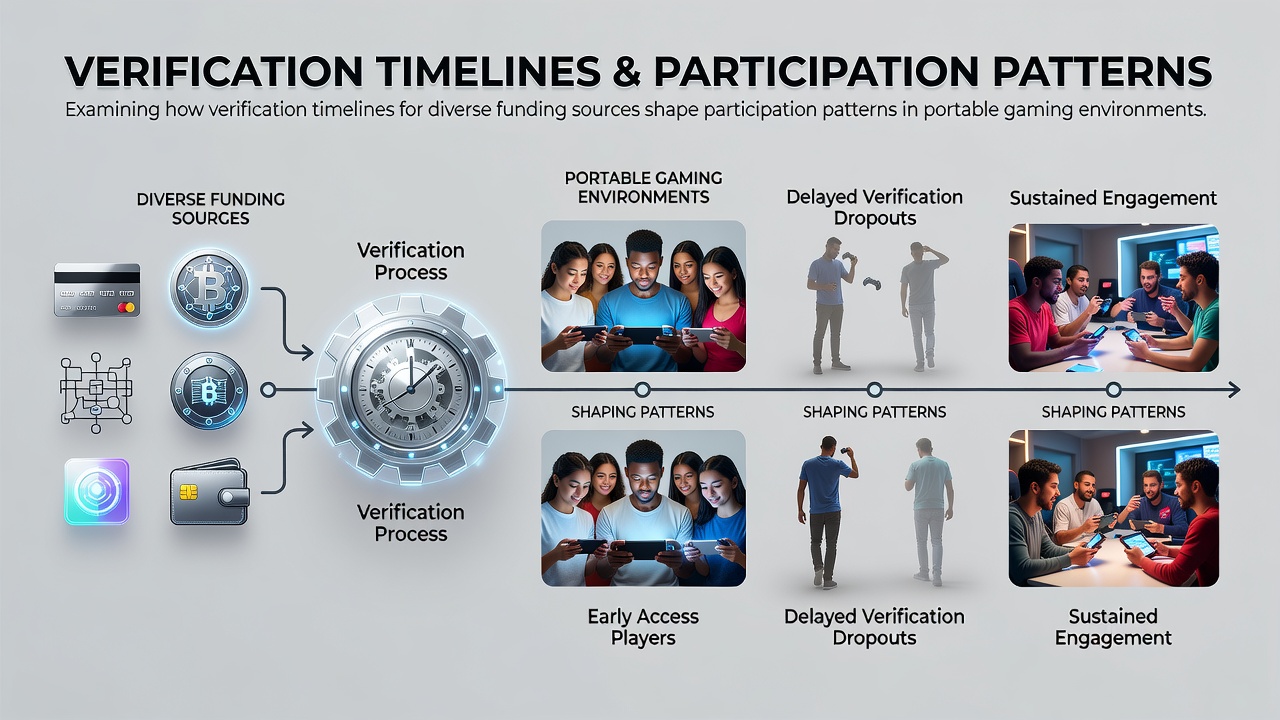
Examining how verification timelines for diverse funding sources shape participation patterns in portable gaming environments
Verification timelines for funding sources in portable gaming environments vary widely depending on the payment method selected, and these differences influence how users engage with mobile platforms over time. Credit card deposits often clear within minutes while bank transfers require one to three business days for full authentication, creating distinct entry points for participants who access gaming sessions from smartphones or tablets. Data from regulatory analyses shows that shorter verification periods correlate with higher initial login frequencies, particularly among users who prefer quick transactions during short breaks or commutes.
Differences Across Funding Methods
E-wallets such as those operated by international providers typically complete identity checks in under an hour because they rely on pre-verified account details, whereas cryptocurrency options introduce additional steps involving blockchain confirmations that can extend from fifteen minutes to several hours depending on network congestion. Prepaid vouchers and gift cards demand manual code validation at the operator level, adding another layer that stretches timelines into the next business day for some regions. Researchers tracking mobile participation note that these variations lead users to cluster around faster methods when they plan spontaneous sessions, while slower options attract those scheduling longer play periods in advance.
Observed Participation Shifts in Mobile Contexts
Portable gaming environments amplify the effects of these timelines because users expect seamless access without desktop-based administrative tasks. Figures from industry reports indicate that platforms offering same-day verification for at least three funding types record elevated session starts on weekdays, especially between 8 and 10 AM or during evening commutes. When verification stretches beyond twenty-four hours, engagement drops noticeably among first-time participants who abandon the process midway, shifting overall patterns toward repeat users who have already completed initial checks through quicker channels.
Studies conducted across multiple jurisdictions reveal that diverse funding sources create segmented user groups within the same application. Those relying on instant card payments maintain shorter but more frequent sessions, averaging twelve to fifteen minutes per interaction, while individuals waiting for bank approvals extend single sessions to compensate for the delayed start. In August 2026, updated compliance frameworks in several North American markets are expected to standardize certain authentication protocols, potentially narrowing some of these gaps for operators serving cross-border mobile traffic.

Regional Regulatory Influences
Authorities outside the UK have documented similar trends through their own monitoring systems. The New Jersey Division of Gaming Enforcement publishes quarterly summaries showing that verification speed directly affects retention rates for mobile-only accounts, with faster methods sustaining activity across state lines. Meanwhile, analyses from the Australian Communications and Media Authority highlight how local banking integration timelines shape participation curves in iGaming apps, particularly when users encounter multi-factor authentication requirements that add extra hours to the process.
Operators adjust their interface designs in response to these patterns, prioritizing prominent placement of e-wallet icons on mobile dashboards to steer traffic toward quicker routes. Academic reviews of transaction logs from 2024 through mid-2025 demonstrate that participants who encounter delays exceeding forty-eight hours rarely return within the same month, whereas those completing setup in under ten minutes exhibit consistent weekly activity spikes. This distribution creates measurable differences in peak usage hours across time zones served by the same platform.
Future Data Points and Adjustments
Upcoming reports scheduled for release after August 2026 will likely provide further breakdowns by funding category and device type, allowing clearer mapping of how verification friction translates into participation metrics. Observers note that portable environments remain especially sensitive to these factors because screen size limits the visibility of alternative payment prompts during the onboarding flow. As more regions introduce real-time verification pilots for select methods, the resulting data should clarify whether participation stabilizes across slower and faster options or continues to favor instant channels.
Conclusion
Verification timelines tied to specific funding sources continue to define distinct participation rhythms in portable gaming environments, with empirical records showing clear links between processing speed and user return rates. Regional agencies and research bodies supply the figures that track these dynamics across different markets, and ongoing regulatory updates will supply additional context for how mobile platforms evolve their payment integrations moving forward.